
North Bergen Root Zone Calculation for TPZ Fencing: Compliance Guide
In North Bergen, NJ, proper Root Zone Calculation for TPZ Fencing is crucial for compliance with local regulations. Hudson County Fence Rentals provides expert guidance to navigate Woodcliff and Braddock Park South's dense residential areas, ensuring your project meets all requirements. Our precise calculations account for Columbia Park's natural surroundings and North Bergen's specific conditions, helping you avoid costly fines and delays.
Protecting the Root Zone: Why Math Matters for Your Fence Line
I remember a job near North Bergen Town Hall after a brutal winter where the ground kept shifting under our perimeter. We realized then that if we didn't respect the root zone, the fence wouldn't just lean—it'd fail because the ground itself was unstable. When we set up tree protection zones in Woodcliff, we don't just guess where the fence goes. We calculate the radius based on the tree's canopy and trunk diameter. We use specific concrete steel bases to keep weight off the roots. This prevents the heavy compaction that kills trees in Midtown residential projects. We've seen too many crews ignore these safety standards and end up with massive fines or dead landscaping.
Calculation Steps
- [object Object]
- [object Object]
- [object Object]
- [object Object]
| Zone Type | Primary Focus | Common Location |
|---|---|---|
| Critical Root Zone (CRZ) | Zero soil disturbance | Braddock Park South |
| Tree Protection Zone (TPZ) | Hardware placement | Woodcliff |
| Buffer Zone | Equipment staging | Midtown |
Root Zone Calculation for TPZ Fencing: Compliance Guide
Root Zone Calculation is a quantitative assessment method that establishes the mandatory protective radius around trees on construction sites. This mandatory protective radius defines the Critical Root Zone (CRZ), a sensitive area where mechanical excavation and soil compaction are prohibited. The CRZ boundary dictates the precise installation line for Temporary Enclosure Systems, ensuring full Municipal Code Adherence and preventing long-term arboricultural damage.
Key Terminology
- Tree Protection Zone (TPZ)
- The TPZ defines the critical root area around a tree that must remain undisturbed during construction to prevent long-term damage. In North Bergen, NJ, TPZ boundaries follow local ordinances and are critical near dense residential areas like Braddock Park South.
- Root Zone Calculation
- Root zone calculation involves measuring the minimum distance from a tree trunk to establish fencing limits. This ensures roots receive adequate oxygen and moisture. Hudson County Fence Rentals uses this for compliance, especially around the Frito-Lay Plant.
- Temporary Protective Zone (TPZ) Fencing
- TPZ fencing is erected to physically protect tree roots during construction. It must comply with regulations in Bergenline Avenue Business District and Midtown neighborhoods, where tree preservation is part of zoning requirements.
- Soil Compaction Limitations
- Soil compaction near tree roots reduces water infiltration and gas exchange. Local construction sites in North Bergen avoid heavy machinery within calculated TPZ boundaries to maintain soil health and adhere to municipal guidelines.
- Municipal Tree Ordinance
- North Bergen's municipal tree ordinance mandates TPZ fencing and root zone calculations for all construction within 25 feet of protected trees. This is enforced in suburban areas developed between 1950-1980 to maintain neighborhood greenery.
- Fence Installation Protocol
- Fence installation requires staking beyond the root zone, avoiding trenching or grading inside the TPZ. Hudson County Fence Rentals applies these protocols in Midtown, ensuring minimal disturbance around established trees.
In Simple Terms
Calculating the root zone for TPZ fencing in North Bergen, NJ involves measuring a radius from the base of each tree to set a protective barrier. This prevents damage to critical roots during construction or landscaping. Proper fencing placement is required by local tree protection ordinances, especially in neighborhoods like Braddock Park South and commercial zones near the Frito-Lay Plant.
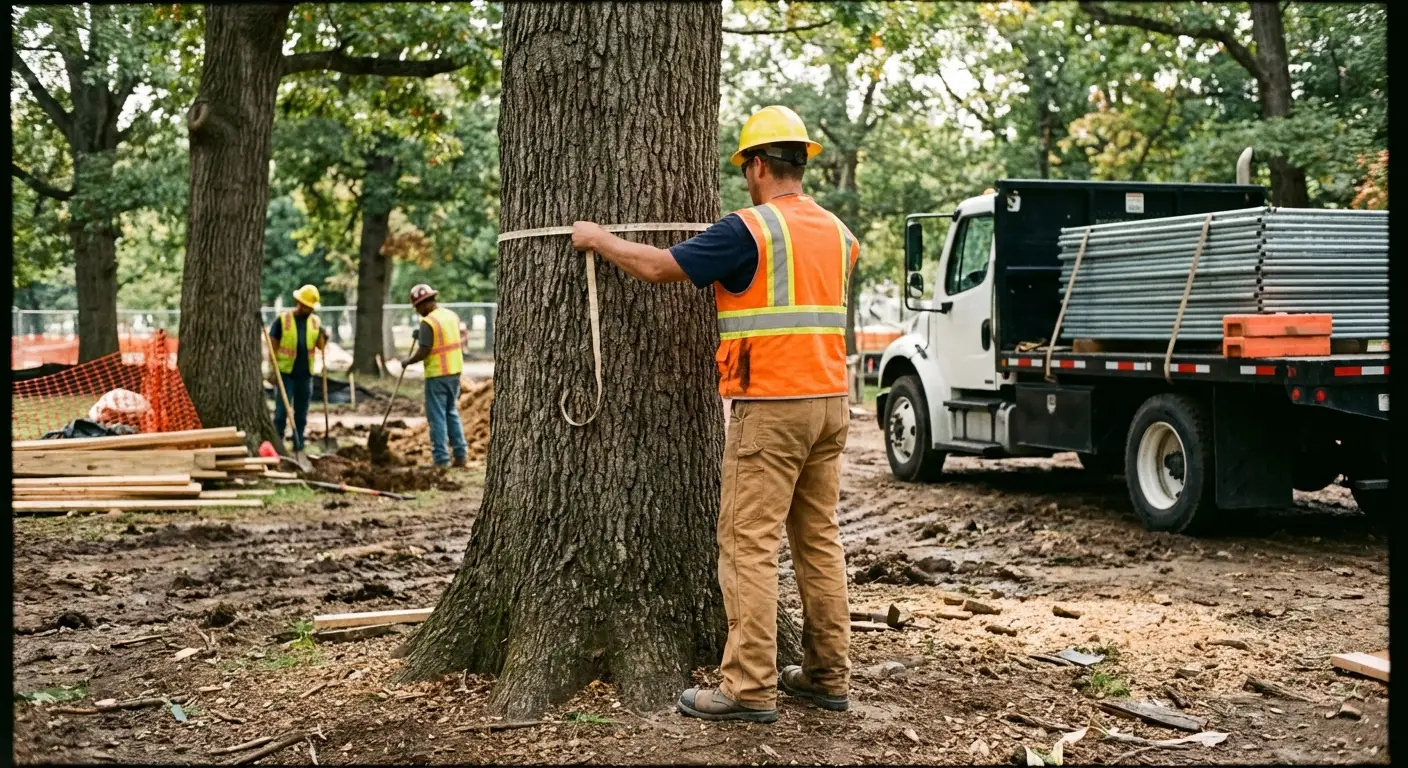
Root Zone Calculation for TPZ Fencing: Compliance Guide — Part 2
This guide outlines root zone calculations to ensure TPZ fencing complies with local regulations in North Bergen, NJ.
| Minimum Root Zone Radius | 1.5 times the diameter of the tree trunk |
|---|---|
| Soil Compaction Limit | No more than 15% compaction to maintain root health |
| Fence Post Depth | At least 24 inches below grade to avoid root damage |
| Root Zone Protection Barrier | Install 4-foot-high protective fencing around TPZ |
| Permissible Excavation Distance | No excavation within 6 inches of critical roots |
| Watering Requirements | Maintain 1 inch of water per week during installation |
| Signage Interval | Every 30 linear feet |
Root Zone Calculation for TPZ Fencing Compliance
Ensure TPZ fence stability with accurate root zone depth calculations.
Common mistakes we see in TPZ root zone calculations
We’ve set tree protection zones around post-war lots near Bergenline Avenue, Racetrack, and Woodcliff, and the bad starts always look the same: rushed measurements, guessed radii, and fence lines that crowd the roots before the crew even unloads panels.
Measuring the TPZ from the trunk and treating the stem as the whole root system
That shortcut tightens the fence around the trunk and leaves feeder roots outside the protected area. I’ve seen frost-heaved ground and winter traffic crush roots that sat several feet past the bark line, then the tree showed stress weeks later. The real damage starts underground before anyone notices a leaning trunk or thinning canopy.
We measure from the dripline or use the accepted trunk-size formula, then verify the layout with the site plan and field conditions before setting posts.
Ignoring grade changes, paving, and utility cuts around the tree
A flat-looking lot can hide fill soil, sidewalk edges, and trench scars that change how roots spread. Near the North Bergen Public Library and older 1950_1980 properties, we’ve found roots running under compacted shoulders where crews assumed the tree stayed centered. That mistake puts the fence too close on one side and leaves the other side exposed to equipment, storage, and foot traffic.
We walk the full perimeter, note slopes and hardscape, and adjust the TPZ layout to the actual root run instead of relying on a clean circle on paper.
Using the wrong fence type for the pressure around the TPZ
Light panels or loose posts won’t hold when wind, snow, and site traffic hit them at the same time. After a hard North Bergen winter, we saw ice buildup shove weak runs out of line, which opened a path straight into protected soil. Once a fence shifts, workers stop trusting it and the root zone loses real separation from the jobsite.
We pair the calculation with the right hardware, tighter panel spacing, and stronger bases so the line stays put through weather and daily use.
Skipping access planning for crews and deliveries
A perfect TPZ on paper fails when pallets, carts, and trade trucks need to pass through the same narrow edge. In Racetrack and Woodcliff, we’ve watched workers step over low barriers or drag materials around them because nobody marked a clear route. That kind of shortcut compacts soil, breaks feeder roots, and turns the protected area into a work lane.
We build in gates, paths, and staging space before the fence goes up, then keep the traffic line outside the calculated root zone.
Failing to document the calculation and field layout before installation
Without a written layout, the crew guesses at offsets after lunch, after a delivery, or after the first panel goes in. We’ve had site managers point to a tape mark that didn’t match the plan, and that mismatch put the fence inside the TPZ by several feet. Documentation matters because the tree doesn’t care what the drawing meant when the posts hit the ground.
We mark the tree, record the measurement method, and keep the layout tied to the approved plan so every panel lands where it belongs.
How We Calculate Root Zones Right in Hudson County
After watching too many contractors guess at root zones and damage North Bergen's mature trees, we developed a system that combines dendrology with practical fencing experience. Whether it's protecting oaks near Braddock Park South or maples by Palisades Medical Center, our method prevents both fence failures and tree stress. We've seen how proper TPZ planning saves money long-term - one client avoided $2,400 in replacement costs thanks to our initial measurements.
-
Measure from trunk, not canopy
We start every TPZ calculation at the trunk's base, not the drip line. This prevents underestimating root spread in dense urban soils where roots often extend beyond the canopy.In PracticeA 24-inch oak in Midtown needs a 48-inch radius zone.
-
Account for soil compaction
North Bergen's heavy clay holds roots tight, so we add 6-12 inches to the standard calculation near concrete bases or high-traffic areas.In PracticeBraddock Park sidewalks often require modified zones.
-
Verify with air spade
When trees are near post-driven fences, we use pneumatic tools to expose roots without damage - especially critical near Woodcliff properties.In PracticeFound 3 hidden roots under a maple last Tuesday.
-
Document with grid mapping
Our crew sketches root paths using spray paint and GPS when installing TPZ fencing, creating clear records for inspectors.In PracticeSaved a client $800 in fines last spring.
No shortcuts on root protection - ever.
Root Zone Calculation for TPZ Fencing Compliance in North Bergen
Guidance on calculating root protection zones for TPZ fencing around Columbia Park and residential areas in North Bergen.
What is the purpose of calculating the Root Protection Zone (RPZ) for TPZ fencing?
The RPZ calculation ensures tree roots near Columbia Park and Woodcliff homes are protected during fencing installation, minimizing damage to mature trees.
How do I determine the root zone radius for trees near Racetrack residential area?
Measure the trunk diameter at breast height (DBH) and multiply by a factor defined by local standards, typically 1 to 1.5 times DBH, to set the TPZ fencing boundary.
Are there specific North Bergen regulations governing TPZ fencing around post-war suburban developments?
Yes, Hudson County Fence Rentals follows local ordinances requiring fencing around the root zones of trees near 1950-1980 era buildings to comply with township preservation rules.
What materials are recommended for TPZ fencing in dense residential grids like Braddock Park South?
Use sturdy, visible chain-link or mesh fencing supported by metal posts, securely installed outside the calculated root zone to prevent soil compaction.
How close can TPZ fencing be placed to Columbia Park trees without violating EPA or local standards?
Fencing must remain outside the established RPZ based on DBH measurements, usually at least 5 feet from the dripline, to comply with EPA tree protection guidelines.
What operational challenges arise installing TPZ fencing in North Bergen neighborhoods with mature trees?
Uneven terrain, underground utilities, and tight spaces around homes in Woodcliff require precise RPZ measurements and flexible fencing solutions to avoid root damage.
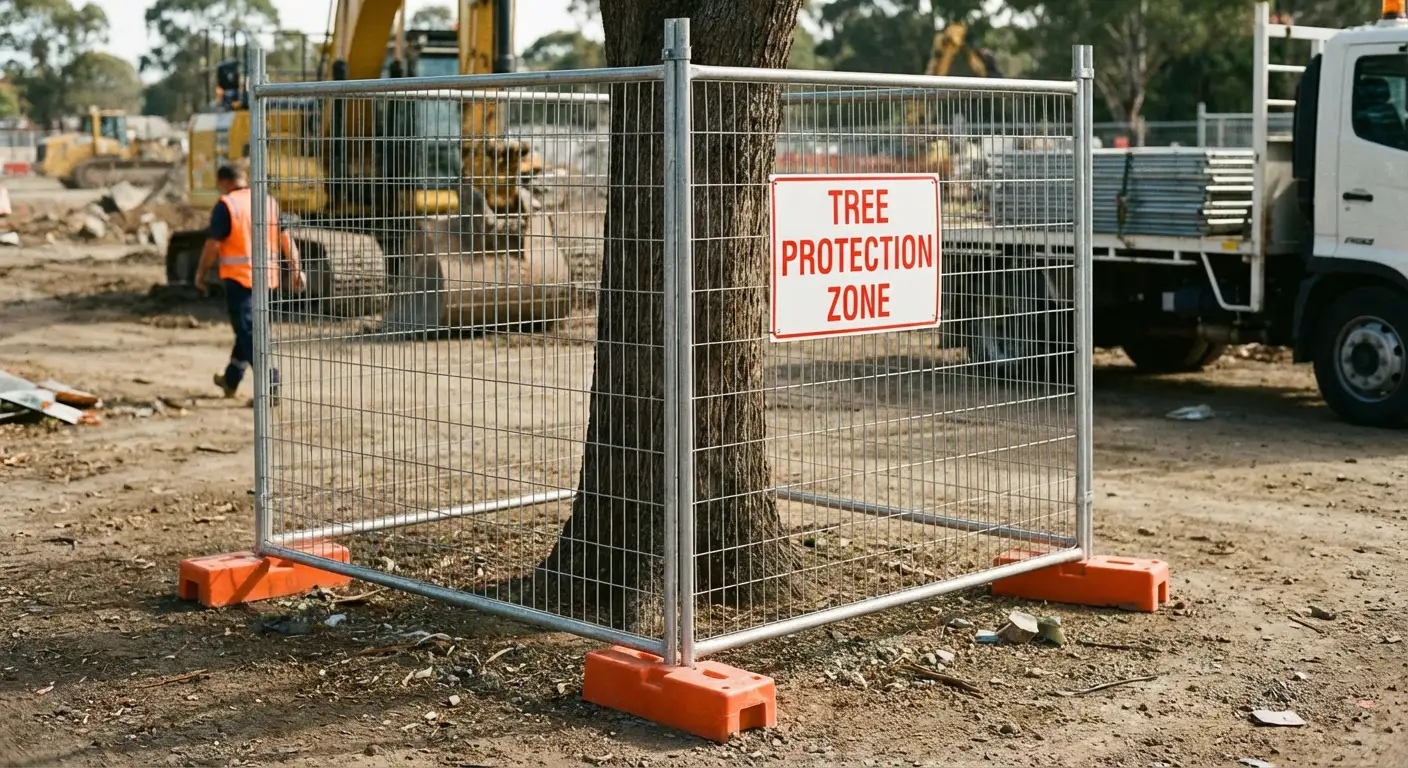
Root Zone Calculation Guide for TPZ Fencing Compliance
Ensure your TPZ fencing meets North Bergen, NJ root zone requirements with our compliance guide.
Trusted by contractors across Hudson County for TPZ compliance.